
It's no secret that electricity and water aren't a good combination with heavy rain causing tripping issues pretty quickly on poorly installed or old outdoor electrical items but even small amounts of moisture during the installation can still cause issues later down the line.
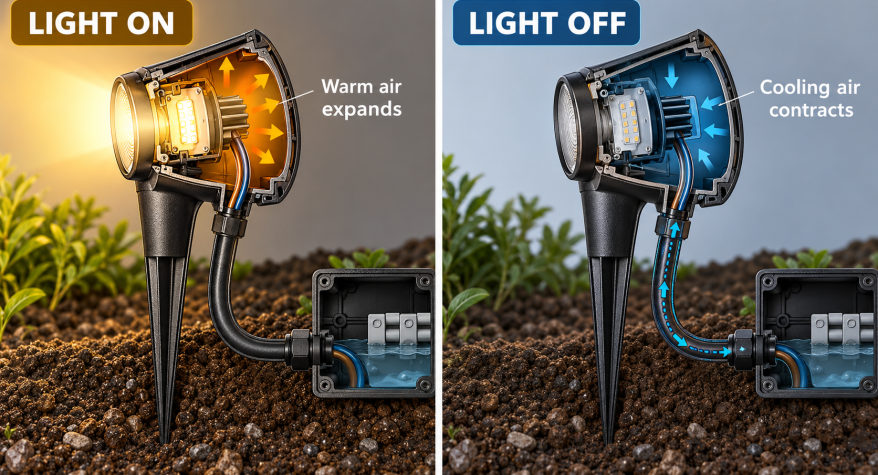
Outdoor lighting and sockets have varying degrees of 'IP rating' which means they're sealed from water ingress and solid object ingress to different levels but if there's water in a joint box further down this can still make its way in to your brand new IP rated light fitting all thanks to capillary action and the heating and cooling of the light fitting.
Flexible cables and armoured cables are twisted/braided together during the manufacturing process which leaves small gaps in the cable. If water reaches an exposed end it can travel along the cable in those gaps.
An unethical hack I've heard some electricians do is to soak their scrap armoured cable in in a tub of water. The steel armour and capillary action means water gets drawn in to the cable making it heavier when they weight it in for scrap! Naughty!
But what does heating and cooling have anything to do with it?
Lets say you have a ground spike light which is a sealed unit. During use the unit will heat up (even more so if you're still using halogen bulbs) which will cause the air in it to expand. When it is off the air inside will cool down and contract which effectively uses the cable and capillary action as a straw to suck the moisture either in the cable or a joint box in to the sealed light. Overtime this moisture will corrode components and eventually cause tripping or make the light fail.
What is the best way to install outdoor lighting?
In dry weather is probably the biggest part of the answer but you should always follow manufacturers instructions to maintain the IP rating of the units.
I'm a fan of using something called magic gel in my joint boxes. This seals the connections from water ingress and as long as it's probably used it should stop the capillary action too. In fact, some lights now come with a small gel joint box next to the light to help stop this happening!
Frequently Asked Questions
Can rain cause my outdoor lights to trip the electrics?
Yes. Rain water or water from jet washing can enter lights, or joint boxes causing tripping issues. A good competent electrician would be able to locate the fault and repair.
Why does condensation form inside outdoor lights?
Condensation forms when moisture in the air encounters a surface cold enough for water vapour to turn into liquid droplets. Temperature fluctuations inside outdoor lights can contribute to this process.
Can water travel through electrical cables.
Yes, water can move through the small gaps in cables. This is called capillary action or water wicking.
Does IP65 mean my light is waterproof?
To a degree, yes, IP ratings are rated to different levels but doesn't guarantee it's fully waterproof. You're best checking the manufacturers instructions.
Should I replace an outdoor light that contains water?
It would depend on the extent and WHY their is water present. Sometimes it can be dried out, properly sealed and you're good to go. If seals have perished it might be necessary to replace the light.
- Log in to post comments