
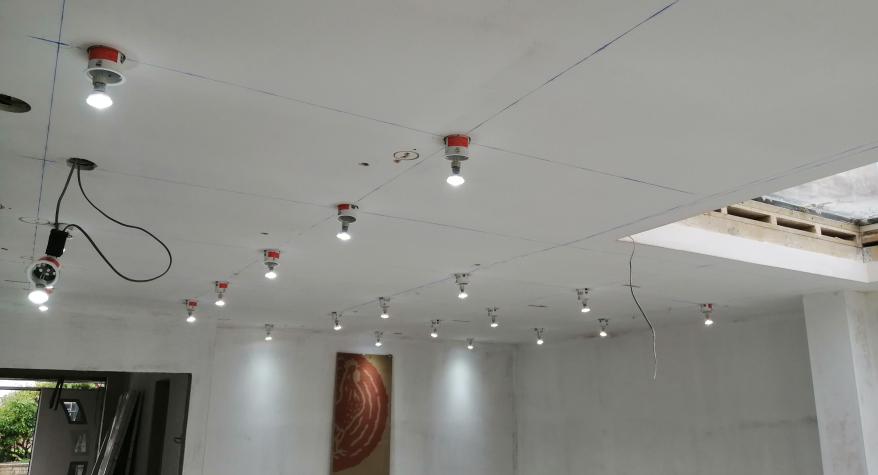
Spotlights can sharpen a kitchen, hallway, bathroom, utility room, or living space, but the wrong fitting can cause glare, patchy lighting, overheating, or awkward maintenance. The main choice usually comes down to GU10 downlights or integrated LED downlights.
A GU10 spotlight uses a replaceable lamp. An integrated LED downlight has the LED built into the fitting. Both can work well, but the right choice depends on access, room type, budget, beam angle, dimming, fire rating, and how long you plan to stay in the property.
What is a GU10 spotlight?
A GU10 spotlight is a recessed downlight fitting that takes a removable GU10 lamp. The lamp twists into place using two short pins.
GU10 fittings suit homeowners who want easy lamp replacement. If one lamp fails, the electrician or homeowner can usually replace the bulb without changing the fitting. GU10 lamps come in different brightness levels, colour temperatures, beam angles, and dimmable options.
For many domestic installations, a fire-rated GU10 downlight with a good quality LED lamp gives a practical balance of cost, flexibility, and future maintenance.
What is an integrated LED downlight?
An integrated LED downlight has the light source built into the fitting. There is no separate bulb to replace. When the LED reaches the end of its life, the whole fitting normally needs replacement.
Integrated LEDs often look neat and can provide a clean, modern finish. Many offer low profile designs, sealed fronts, selectable colour temperature, and good light output. They can suit kitchens, bathrooms, and areas where a slim fitting helps with ceiling void restrictions.
The downside is maintenance. If one integrated fitting fails years later, the exact model may no longer exist. That can leave one mismatched light in an otherwise tidy ceiling.
GU10 vs integrated LED: which is better?
For most domestic homes, GU10 downlights are often the safer long-term choice for maintainability. They allow the lamp to be changed without replacing the fitting, which matters in kitchens, hallways, and living rooms where matching several lights matters.
Integrated LED downlights can be the better choice where a specific fitting depth, IP rating, light output, or finish makes sense. They also suit rooms where the homeowner wants a sealed unit with fewer visible parts.
A good electrician will consider the ceiling construction, insulation, fire separation, dimming, room use, and future access before recommending either option.
Fire-rated downlights matter
Recessed spotlights require holes in the ceiling. Those holes can affect the ceiling’s ability to slow the spread of fire. Electrical Safety First advises that downlighters must suit the surface, voltage, fire performance, and installation conditions.
In many domestic settings, especially where there is a room above, fire-rated downlights make sense. Approved Document B covers fire safety requirements for dwellings and other buildings in England.
Fire rating does not mean the fitting can be covered with loft insulation. The manufacturer’s instructions decide whether insulation can sit over or near the fitting. Some downlights need clear space above them to manage heat.
Bathroom spotlights need the correct IP rating
Bathroom lighting needs more care because water and electricity share the same room. Downlights near showers, baths, and basins must suit the bathroom zone and have the correct IP rating.
A sealed, fire-rated, IP-rated LED downlight often suits bathrooms better than an open fitting. The exact fitting depends on the ceiling height, shower position, ventilation, and zone.
Colour temperature: warm white or cool white?
Colour temperature affects how the room feels.
Warm white, around 2700K to 3000K, suits living rooms, bedrooms, dining areas, and traditional kitchens. It gives a softer light.
Neutral white, around 4000K, suits utility rooms, modern kitchens, offices, garages, and task areas.
Avoid using cool white in relaxing rooms unless the design calls for a crisp, clinical look. Many homeowners regret harsh downlights more than dim ones.
Beam angle and spacing affect the result
Poor spotlight spacing causes dark patches, glare, and bright pools on the floor. The number of fittings should come from the room layout, ceiling height, beam angle, worktop positions, furniture, and task areas.
A kitchen needs light where people work, not a grid of fittings placed without reference to cupboards, islands, sinks, and appliances. In a living room, fewer downlights with lamps, wall lights, or pendants can feel better than a ceiling full of spotlights.
Dimming GU10 and LED spotlights
Dimming LED spotlights needs compatible lamps, fittings, and dimmer switches. A standard old dimmer may cause flicker, buzzing, limited dimming range, or early lamp failure.
For GU10 downlights, choose dimmable LED GU10 lamps and a suitable LED dimmer. For integrated fittings, check that the fitting supports dimming and that the dimmer matches the manufacturer’s requirements.
Energy use: LED beats halogen
Old halogen GU10 lamps use more electricity and produce more heat than LED replacements. The Energy Saving Trust says upgrading to energy efficient bulbs can reduce electricity use and that LED lighting remains one of the easiest home energy upgrades.
Replacing halogen GU10 lamps with LED GU10 lamps can improve efficiency without changing every fitting, provided the existing fittings are safe and suitable.
Common mistakes with spotlight installation
The most common mistakes include:
- Fitting too many spotlights
- Choosing the wrong colour temperature
- Ignoring beam angle
- Installing non-fire-rated fittings where fire performance matters
- Covering fittings with insulation against manufacturer instructions
- Using cheap lamps that flicker or fail early
- Fitting bathroom lights with the wrong IP rating
- Using incompatible dimmers
- Placing kitchen spotlights without checking cabinet and appliance positions
FAQ
Are GU10 spotlights LED?
A GU10 describes the lamp cap, not the light technology. GU10 lamps can be halogen or LED, but most new domestic installations now use LED GU10 lamps.
Are integrated LED downlights better than GU10?
Integrated LED downlights can look neater and may offer better sealed designs. GU10 downlights usually win on future maintenance because the lamp can be replaced without changing the full fitting.
Can I replace halogen GU10 bulbs with LED GU10 bulbs?
Yes, in many cases. The existing fitting must be safe, suitable, and in good condition. LED dimming may also require a compatible LED dimmer switch.
Do spotlights need to be fire-rated?
Fire-rated downlights make sense where cutting into a ceiling could affect fire separation, especially below bedrooms or another floor. The fitting must suit the building, ceiling type, and installation conditions.
Can downlights be covered with loft insulation?
Only if the manufacturer states that the fitting can be covered. Fire-rated does not automatically mean insulation-coverable.
Which spotlight colour is best for kitchens?
Warm white around 3000K suits many kitchens. Neutral white around 4000K can suit modern kitchens and task areas. Consistency matters, so avoid mixing colour temperatures in the same ceiling.
Do I need an electrician to install spotlights?
Yes, use a qualified electrician for new spotlight installations, new wiring, bathroom lighting, and any work involving circuit alteration. NICEIC notes that recessed light fittings often cost more to install because ceiling work is involved.
- Log in to post comments