
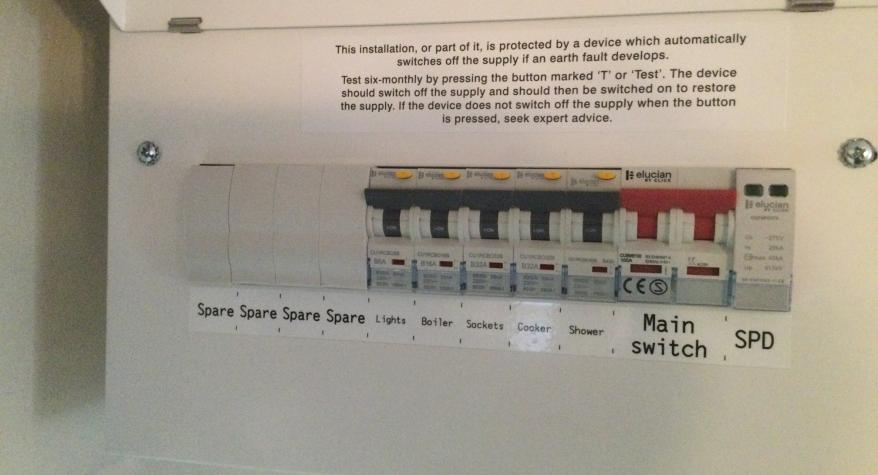
A fuseboard upgrade replaces an older fuse box or consumer unit with a modern unit that gives better protection against electric shock and electrical faults. For Bath homeowners, this often matters in older renovated homes in areas such as Newbridge and Larkhall where the electrical installation has grown over decades.
A modern consumer unit can improve safety, and make future electrical work easier. It also gives an electrician a clearer view of the condition of each circuit before further work takes place.
Signs Your Bath Home May Need a Fuseboard Upgrade
A fuseboard upgrade may suit your property if you have:
- Rewireable fuses with fuse wire
- A wooden backed fuse box
- No RCD protection
- A plastic consumer unit with limited circuit protection
- Frequent tripping or blown fuses
- A burning smell, buzzing, heat marks or cracking around the board
- Plans for a kitchen renovation, EV charger, garden room or extra circuits
Older Bath homes often contain a mix of original wiring, later additions and DIY alterations. A new consumer unit cannot make unsafe wiring safe on its own. Your electrician should inspect and test the existing circuits before fitting the new board and experience tells me that when you don't test it first, the customer is usually left with a costly bill they weren't expecting.
Fuse Box vs Consumer Unit
A fuse box uses fuses to protect circuits. A modern consumer unit uses circuit breakers and residual current devices.
An MCB protects a circuit from overloads and short circuits. An RCD detects current leakage and disconnects the supply to reduce the risk of electric shock. An RCBO combines both forms of protection for one circuit. Many domestic installations now use RCBOs because one fault tends to affect one circuit rather than half the house - RCBO's are now becoming the default to be installed.
Surge protection can also protect sensitive equipment such as boilers, ovens, smart controls, computers and audio equipment from voltage spikes, again, these are pretty much installed by default.
Part P and Building Regulations in Bath
Replacing a consumer unit in England counts as notifiable electrical work under Part P of the Building Regulations. Bath and North East Somerset Council states that electrical work in dwellings must follow Part P requirements. A registered electrician can notify the work through a competent person scheme and issue the correct certification.
After a fuseboard upgrade, you should receive an Electrical Installation Certificate and Building Regulations compliance certificate. Keep both documents with your home records, especially if you plan to sell the property.
The Upgrade Process
A proper fuseboard upgrade follows a structured process:
- Inspect the existing installation
- Check earthing and bonding to gas and water services
- Test each circuit before replacement
- Identify faults before the new board goes in
- Fit the new consumer unit
- Test every circuit after installation
- Label the board with clear circuit descriptions
- Provide certification and Part P notification
Pre-testing matters. If a circuit has damaged insulation, borrowed neutrals, poor DIY additions or missing earth continuity, the new consumer unit may trip as soon as power returns. That does not mean the new board has failed. It means the old installation had faults that the previous fuse box did not detect.
Common Mistakes to Avoid
The cheapest fuseboard upgrade can become expensive if the electrician skips inspection and testing. A safe upgrade needs time, care and accurate diagnosis.
Avoid these mistakes:
- Choosing a quote without checking what testing includes
- Allowing a new board to go on untested circuits
- Ignoring missing bonding
- Treating nuisance tripping as normal
- Fitting the smallest board with no spare capacity
- Forgetting future plans such as a kitchen, utility room, EV charger or heat pump
A good consumer unit should suit the property’s current use and leave sensible room for future circuits.
Fuseboard Upgrades for Kitchen Renovations
Bespoke kitchens often need more electrical capacity than homeowners expect. Ovens, induction hobs, boiling water taps, dishwashers, wine coolers, lighting, underfloor heating and extractor systems can place extra demand on the installation.
Plan the fuseboard upgrade before kitchen work starts. This allows the electrician to assess load, circuit routes, RCD protection and isolation points before cabinets, worktops and finishes restrict access.
How Long Does a Fuseboard Upgrade Take?
Most domestic fuseboard upgrades take one day for the replacement and a few hours before that to do the initial inspection. Older properties may need extra fault finding or remedial work before completion. Large homes, outbuildings and complex installations can take longer.
Power will need to go off during the work. Fridges, freezers, medical equipment, home offices and security systems need planning before the appointment.
Choosing an Electrician in Bath
Choose an electrician who explains the testing process, checks earthing and bonding, provides certification and discusses the right type of board for your home. Quality matters more than the cheapest price because the consumer unit protects every circuit in the property.
For homeowners in Bath, Corsham and West Wiltshire, a careful upgrade gives peace of mind and supports future improvements without guesswork.
FAQ
Does my old fuse box need replacing?
An old fuse box may need replacing if it has rewireable fuses, no RCD protection, visible damage, heat marks or frequent faults. An electrician should inspect and test the installation before recommending replacement.
Is a fuseboard upgrade notifiable?
Yes. A consumer unit replacement in England is notifiable work under Part P of the Building Regulations. A registered electrician can notify the work and provide the required certificates.
Will a new fuseboard stop my electrics tripping?
A new fuseboard may reduce nuisance tripping if the old unit had poor protection. It may also reveal existing wiring faults. Testing identifies those faults before and after installation.
Can a consumer unit be upgraded without rewiring the house?
Yes, if the existing circuits test safely. Damaged, unsafe or outdated wiring may need remedial work before the electrician can complete the upgrade.
What certificates should I receive after a fuseboard upgrade?
You should receive an Electrical Installation Certificate and a Building Regulations compliance certificate. Keep both documents for insurance, future electrical work and house sales.
Should a new fuseboard include surge protection?
Most homes benefit from surge protection because modern properties contain sensitive electronics, boilers, appliances and smart controls. The electrician should assess the property and explain the best option.
Can a fuseboard upgrade help with a kitchen renovation?
Yes. A fuseboard upgrade can provide safer circuit protection and spare capacity for ovens, induction hobs, lighting, boiling water taps and appliance circuits.
- Log in to post comments